Key takeaways
- Registration with the Securities Commission Malaysia (SC) as a Recognised Market Operator is the first thing to check, since only registered platforms are legally permitted to operate in Malaysia.
- A default rate only means something with an as-of date and a clear definition. microLEAP reports 0.23%, defining default as no repayment for six consecutive months.
- Track record, minimum investment, and fee transparency give further ways to compare platforms on facts rather than claims.
- Serious platforms show the profit rate, tenor, risk grade, and Issuer details before an Investor commits, not only in the fine print.
- No platform removes risk; the five criteria let an Investor compare on facts, and microLEAP meets each.
Introduction
Malaysia now has several registered P2P investment platforms, and on the surface they look much alike. Each highlights its returns, track record, and how simple it is to start, which makes it difficult to judge a platform on marketing alone.
This article sets out five criteria that separate a sound platform from a questionable one: registration with the SC, the default rate, track record, the minimum investment and fees, and how transparent the platform is about risk. It does not rank platforms or name a best one. What follows are the important questions to work through when choosing where to invest.
Is the platform registered with the Securities Commission Malaysia?
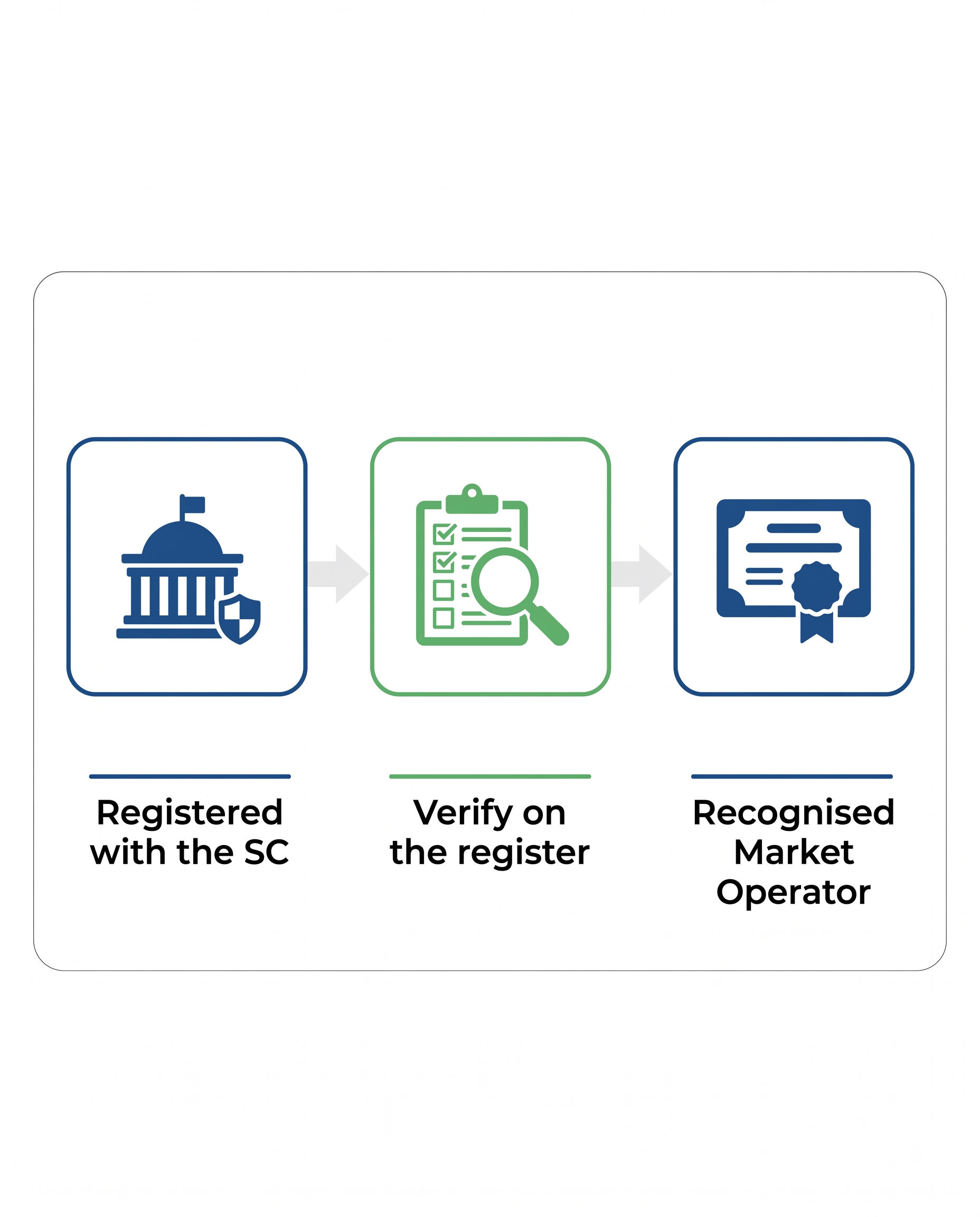
Image: The three checks to confirm a platform's SC registration.
Start here. Only platforms registered with the SC as a Recognised Market Operator are legally permitted to operate a P2P financing platform in Malaysia.
Registration as an RMO carries obligations that matter to an Investor. In practice, these include:
- Holding investor funds in segregated trust accounts, separate from the operator's own money
- Assessing the credit of every Issuer before a Note is listed
- Disclosing risk to Investors
What registration does not mean is just as important. SC registration is not an endorsement, a recommendation, or a guarantee of any platform, product, or return. It confirms that the operator is authorised and supervised, nothing more.
Any Investor can verify a platform's status directly on the SC register of registered market operators. microLEAP PLT is registered with the SC as a Recognised Market Operator.
SC registration is the baseline. It is the first thing to check, not the only thing.
What default rate should you look for?
A default rate is the share of financing that has not been repaid under the agreed terms. It is one of the most quoted figures in P2P, and one of the easiest to misread.
Before comparing one platform's rate with another, check two things: the as-of date, and how that platform defines a default. Definitions differ, so two rates are only comparable if they are measured the same way. On microLEAP, a Note is classified as in default after no repayment for six consecutive months. The platform reports a default rate of 0.23%.
A low rate generally reflects how strictly Issuers are assessed before a Note is listed. Default rates vary from platform to platform, and by the risk level of the Notes on offer, so a headline figure should always be read against the mix of Notes behind it.
A default rate without a date and a definition is not a useful number. It reflects past performance only, not what will happen going forward.
Why doesn't a low default rate guarantee future returns?
A default rate is historical. It describes Notes that have already run their course, under market conditions that have since changed. Every new Investment Note carries its own risk, tied to that specific Issuer and its ability to repay. A low platform-wide rate does not transfer to any single Note an Investor holds, which is why each Note should be reviewed on its own merits before committing.
How long has the platform been operating?
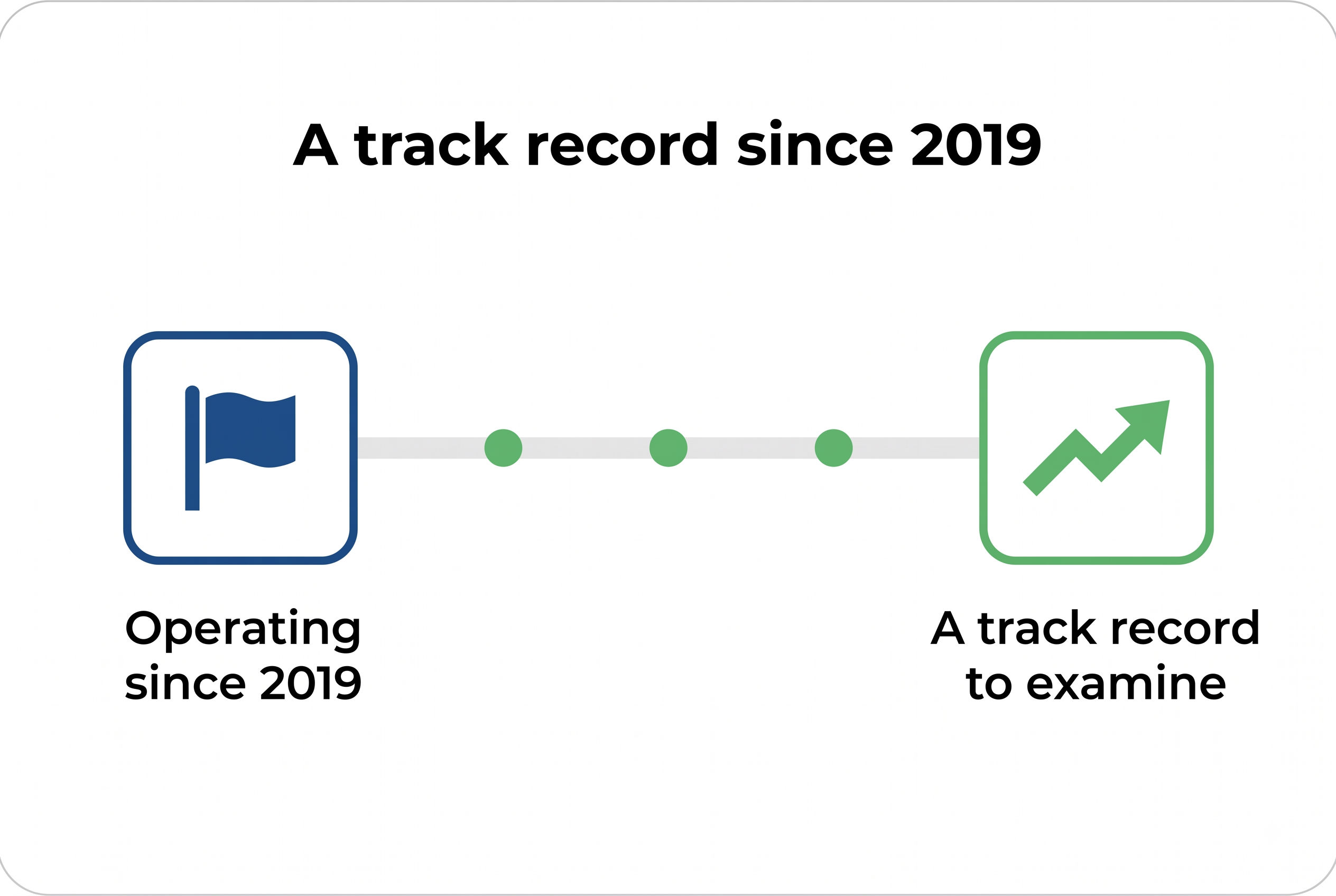
Image: microLEAP’s track record since 2019.
A platform that has operated across different market conditions gives an Investor more to assess than a brand-new one. Longevity is not proof of quality, but it does provide a longer record to examine.
microLEAP has been operating since 2019. To date it reports more than RM736 million in funds disbursed and more than 9,328 Investors on the platform. These are live figures that move over time, so it is worth checking the current numbers on microLEAP's homepage before relying on them.
Track record gives context. It does not guarantee future performance.
All microLEAP figures in this article are as of 13 August 2026.
What are the minimum investment and fees?
A low minimum matters because it lets an Investor spread capital across several Notes rather than concentrating it in one. The wider the spread, the smaller the impact of any single Issuer defaulting.
On microLEAP, the key figures are:
- RM10 minimum per Investment Note
- An Investor (Arrangement) Fee of 2%, charged once per investment, which can reduce to 1.5% or 1% as an Investor rises through microLEAP's League tiers
Transparent fees are as important as low ones. Before committing, an Investor should be able to see the profit rate, tenor, risk grade, and fees for each Note. Hidden or unclear fees are a warning sign. Fees disclosed upfront are a baseline expectation, not a bonus.
How transparent is the platform about risk before you commit?
Risk transparency means information an Investor can see before any money moves, not a disclaimer buried at the bottom of a page. It is one of the clearest ways to tell a serious platform from a superficial one.
What to look for is straightforward: a credit rating on every Note visible before committing, a default rate published with an as-of date, and a clear definition of what the platform counts as a default. On microLEAP, each Investment Note displays the profit rate, tenor, risk grade, and Issuer information before the Investor commits.
Risk, fees, and default rates are made available in accordance with applicable requirements and platform disclosures. A platform that shows you the risk before you commit is behaving differently from one that shows it only in the fine print.
A simple checklist for choosing a P2P platform in Malaysia
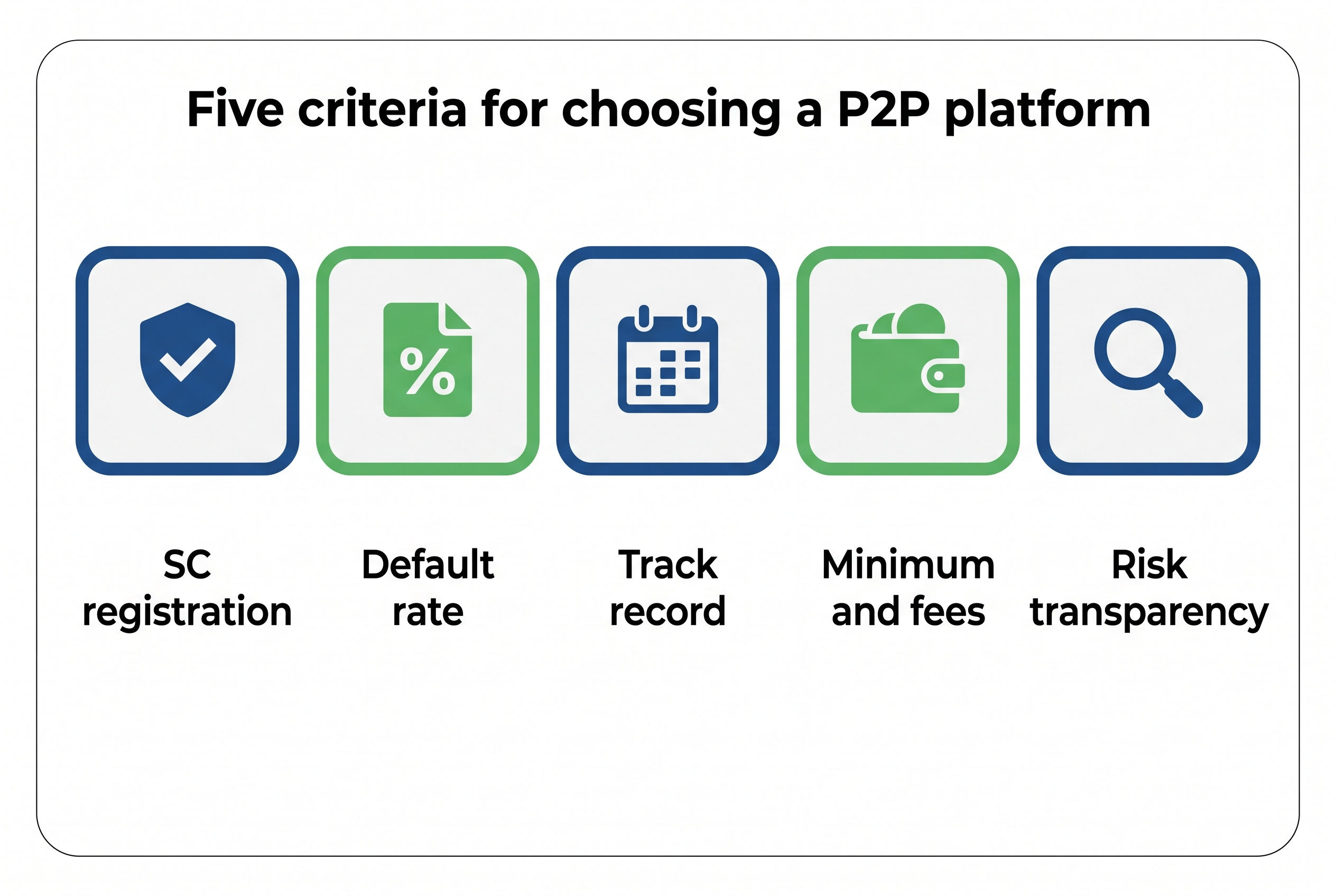
Image: The five criteria for choosing a P2P platform.
Use this checklist to compare platforms on facts, not claims.
| Criterion | What to check | microLEAP |
|---|---|---|
| SC registration | Registered with the SC as an RMO; verify on the SC register | Registered RMO (microLEAP PLT) |
| Default rate | A published figure with an as-of date and a clear definition | 0.23%; default defined as no repayment for six consecutive months |
| Track record | Years operating, and cumulative funds and Investors | Operating since 2019; RM736M+ disbursed; 9,328+ Investors |
| Minimum and fees | Entry point, and whether fees are shown before committing | RM10 per Note; arrangement fee 2%, reducing to 1.5% or 1% by League tier; fees disclosed upfront |
| Risk transparency | Profit rate, tenor, risk grade, and Issuer shown before you commit | Displayed on every Note before committing |
*As of 13 August 2026
No platform eliminates risk. This checklist helps an Investor compare on verified facts rather than marketing claims.
Frequently asked questions about choosing a P2P platform in Malaysia
Which P2P platform is the best in Malaysia?
There is no single best platform. The right one depends on an Investor's own criteria, weighed across SC registration, default rate, track record, minimum investment and fees, and risk transparency. The sound approach is to compare platforms against those five checks and decide which fits your objectives, rather than looking for a single winner.
How do I know if a P2P platform in Malaysia is registered and authorised?
Check the SC register. Only platforms registered with the SC as a Recognised Market Operator are legally permitted to operate a P2P financing platform in Malaysia, and any Investor can verify a platform's status on the SC register.
What is a good default rate for a P2P platform?
There is no universal benchmark. A lower rate generally reflects stricter Issuer assessment before listing, but the figure only means something alongside its as-of date and the platform's own definition of default. Always check both before comparing one platform with another.
How much should a beginner invest in a P2P platform?
Begin with an amount you are comfortable committing, and diversify across multiple Investment Notes rather than concentrating your funds in a single opportunity. This spreads exposure and reduces the impact of any one Issuer defaulting.
What happens to my money if a P2P platform shuts down?
Your money does not sit with the operator. SC-registered platforms are required to hold investor funds in segregated trust accounts under an independent trustee. For microLEAP, the trustee is Universal Trustee (Maybank Trustees Berhad). Because the funds are held separately from the operator's own assets, they are not part of the operator's business, and existing Notes continue to be administered through the trustee arrangement if the operator ceases business.
Conclusion
Choosing a P2P platform is not about finding the highest advertised return. It is about finding one you can verify, assess, and trust before committing any money.
The five criteria in this article give an Investor a practical way to do that: registration with the SC, a dated and defined default rate, a track record to examine, a low entry point with transparent fees, and risk shown before you commit. microLEAP meets each of these, which an Investor can confirm independently rather than take on trust, and without any platform claiming to be the best.
All investments carry risk. Please refer to microLEAP's terms and conditions for full terms and risk disclosures.
For a step-by-step guide to getting started once you have chosen a platform, see How to Start Investing in P2P with as Little as RM10: A Beginner's Guide.
Regulatory and advertising disclosures
This advertisement has not been reviewed by the Securities Commission Malaysia.
microLEAP PLT is registered with the Securities Commission Malaysia as a Recognised Market Operator to operate a P2P financing platform. Registration with the SC does not constitute a recommendation or endorsement by the SC of microLEAP, its products, services or any Investment Note.
P2P Investment Notes are not capital-guaranteed or protected by PIDM. Investors may experience delayed repayment, Issuer default, and partial or total loss of principal. Returns are not guaranteed.