
Key takeaways
- P2P investing can be Shariah-Compliant when it is structured under recognised Shariah contracts and properly certified.
- microLEAP's Shariah-compliant Investment Notes use Commodity Murabahah via a Tawarruq arrangement.
- Oversight comes from Masryef Shariah Advisory, which conducts a yearly Shariah audit and issues a formal certification.
- The three core principles are no Riba, no Gharar, and no Haram activities.
- Shariah-compliant Notes cost no more than Conventional ones and are open to everyone.
Introduction
Many Malaysian investors want to grow their money, but they will not put it anywhere that is not Shariah-Compliant. Faith alignment is the deciding factor, and no return figure matters until that question is answered.
microLEAP is Malaysia's first platform offering both Islamic and Conventional P2P Financing. This article explains what makes the Islamic option a Shariah-Compliant investment in Malaysia, covering the contract used, the principles it follows, the process that keeps it compliant, and who certifies it.
Is P2P investing Shariah-Compliant?
Yes, P2P investing can be Shariah-Compliant when the underlying contract follows recognised Shariah principles and is reviewed and certified by a qualified Shariah adviser. The permissibility does not come from a label but from how the financing is actually structured.
It is the contract structure and the screening behind it that make a Note Shariah-compliant, not the word "Islamic" on its own. microLEAP's Shariah-compliant Investment Notes are built to meet this standard and are clearly labelled on the platform, so you can select them with confidence. They are open to everyone, Muslim and non-Muslim Investors alike.
Check out how microLEAP's Shariah-compliant P2P financing works!
What makes P2P financing Shariah-compliant?
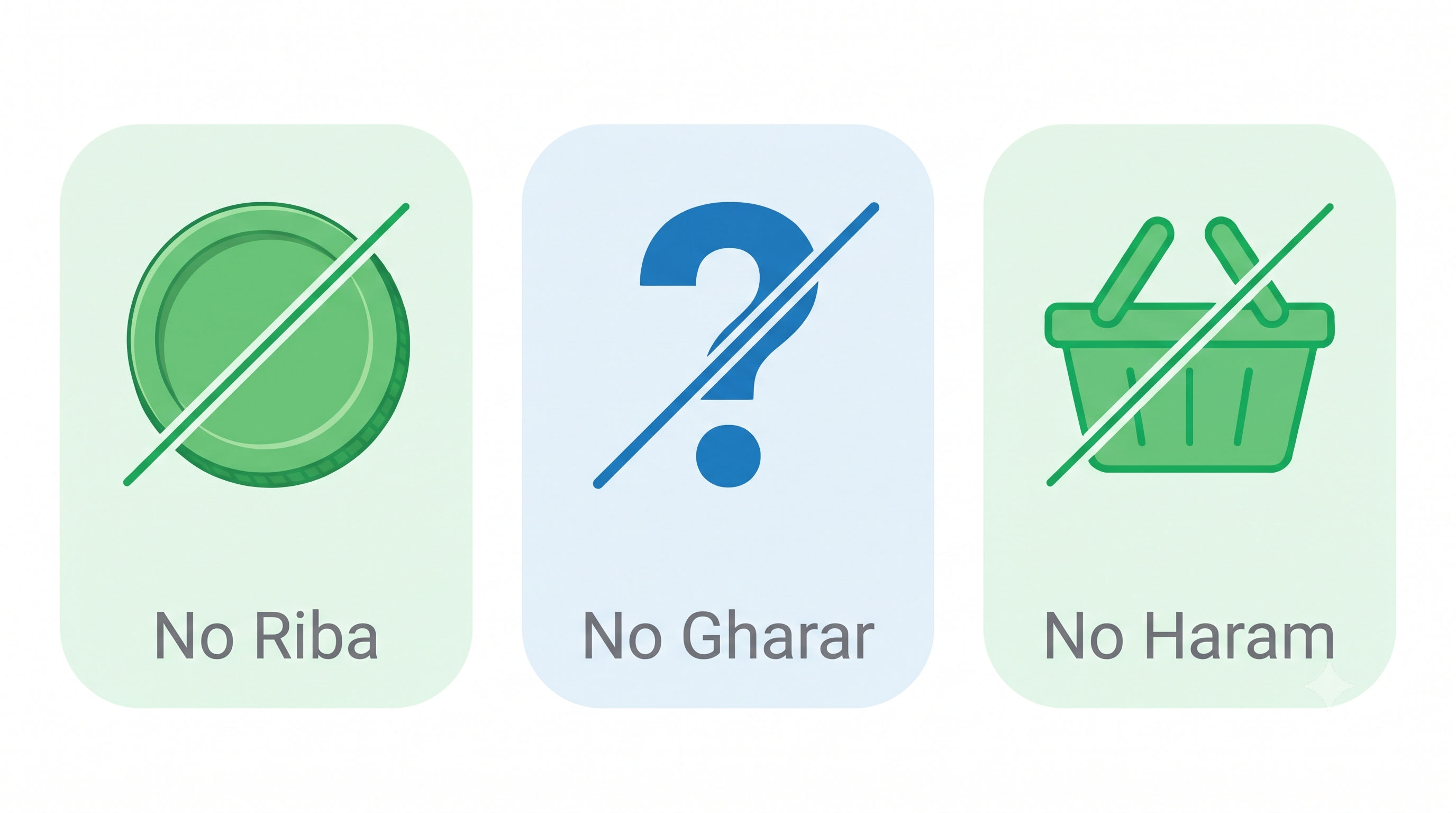
Image: Shariah-compliant financing: no Riba, no Gharar, no Haram.
A Shariah-compliant Investment Note must avoid interest, avoid excessive uncertainty, and avoid prohibited business activities. These three principles define what makes a Shariah-compliant financing structure.
- No Riba (interest): The financing cannot charge or earn interest. Returns come from a different mechanism, explained in the returns section below.
- No Gharar (uncertainty): The terms, the assets involved, and each party's obligations are clear and transparent from the start.
- No Haram activities: Businesses in prohibited sectors are screened out, for example, alcohol, gambling, pork, interest-based lending, and conventional insurance.
What is Commodity Murabahah via Tawarruq?
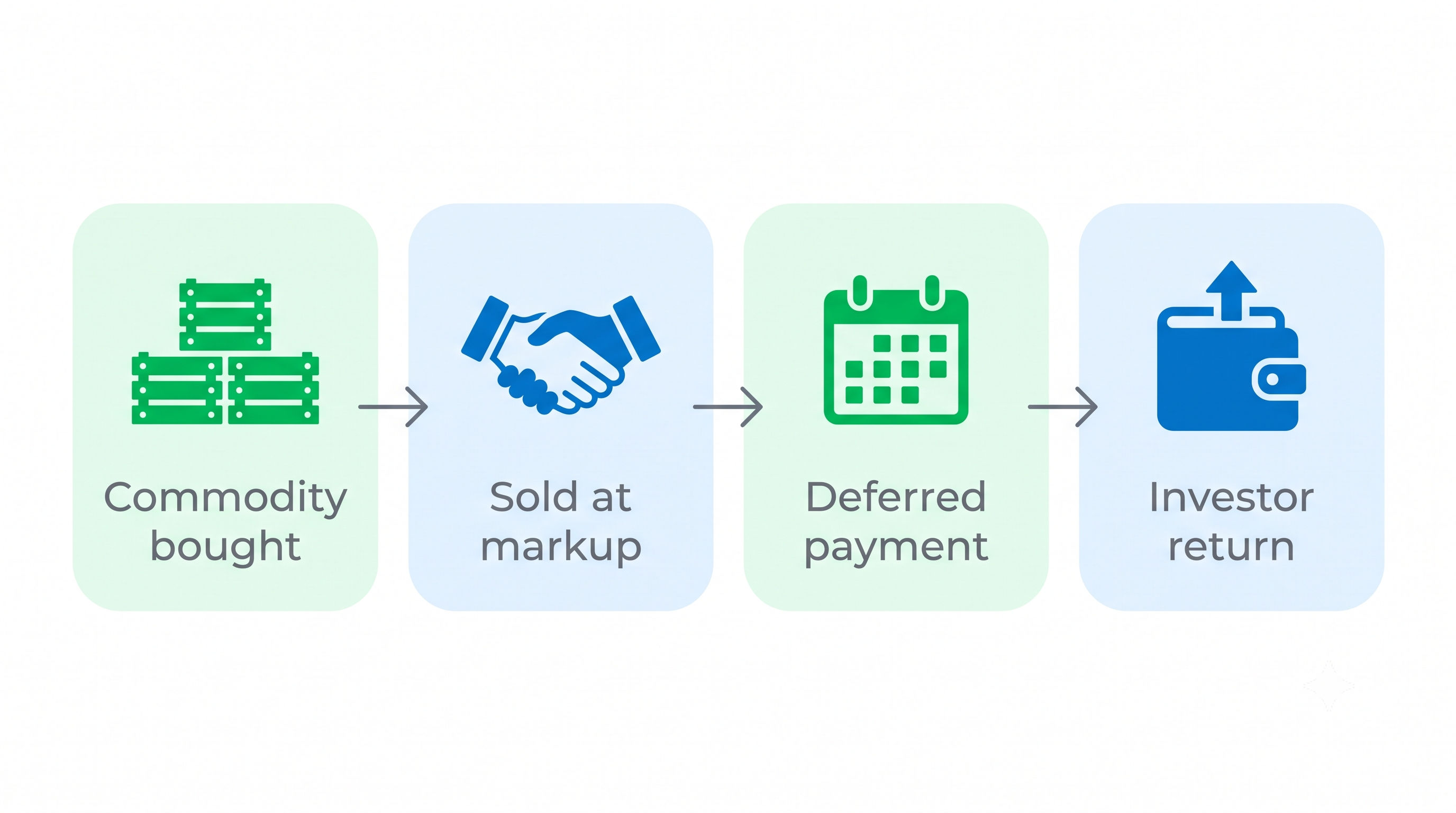
Image: How Commodity Murabahah via Tawarruq works as a trade-based contract.
Commodity Murabahah via Tawarruq is the Shariah contract microLEAP uses to structure its Islamic financing without interest.
Under this arrangement, assets or commodities are purchased on a deferred-payment basis, with Murabahah as the financing mode. In plain terms, Murabahah is a cost-plus sale, where the seller states the cost and an agreed profit margin openly. Tawarruq is the arrangement of buying and then selling a commodity to arrive at a permissible financing outcome. Together, they allow financing to happen through a real, transparent trade rather than through interest.
This is what keeps the structure Shariah-compliant, and it is why microLEAP describes its Islamic Notes by the contract used rather than simply labelling them "Islamic". The contract determines compliance, and the label makes it easy to identify.
How do returns work in Shariah-compliant investing?
Returns come from the profit margin on a trade, agreed upfront, not from interest. It is the distinction that defines Islamic investment in Malaysia, and it is what makes the earnings Shariah-Compliant.
For a Murabahah contract, the profit is the cost price plus an agreed markup, set at the very start of the transaction. This is permissible in Islam because it represents compensation for the risk taken and the service provided in facilitating a genuine trade, rather than interest charged on money lent. You know the profit basis at the outset, and it does not accrue as interest would.
How does microLEAP keep Notes Shariah-compliant?
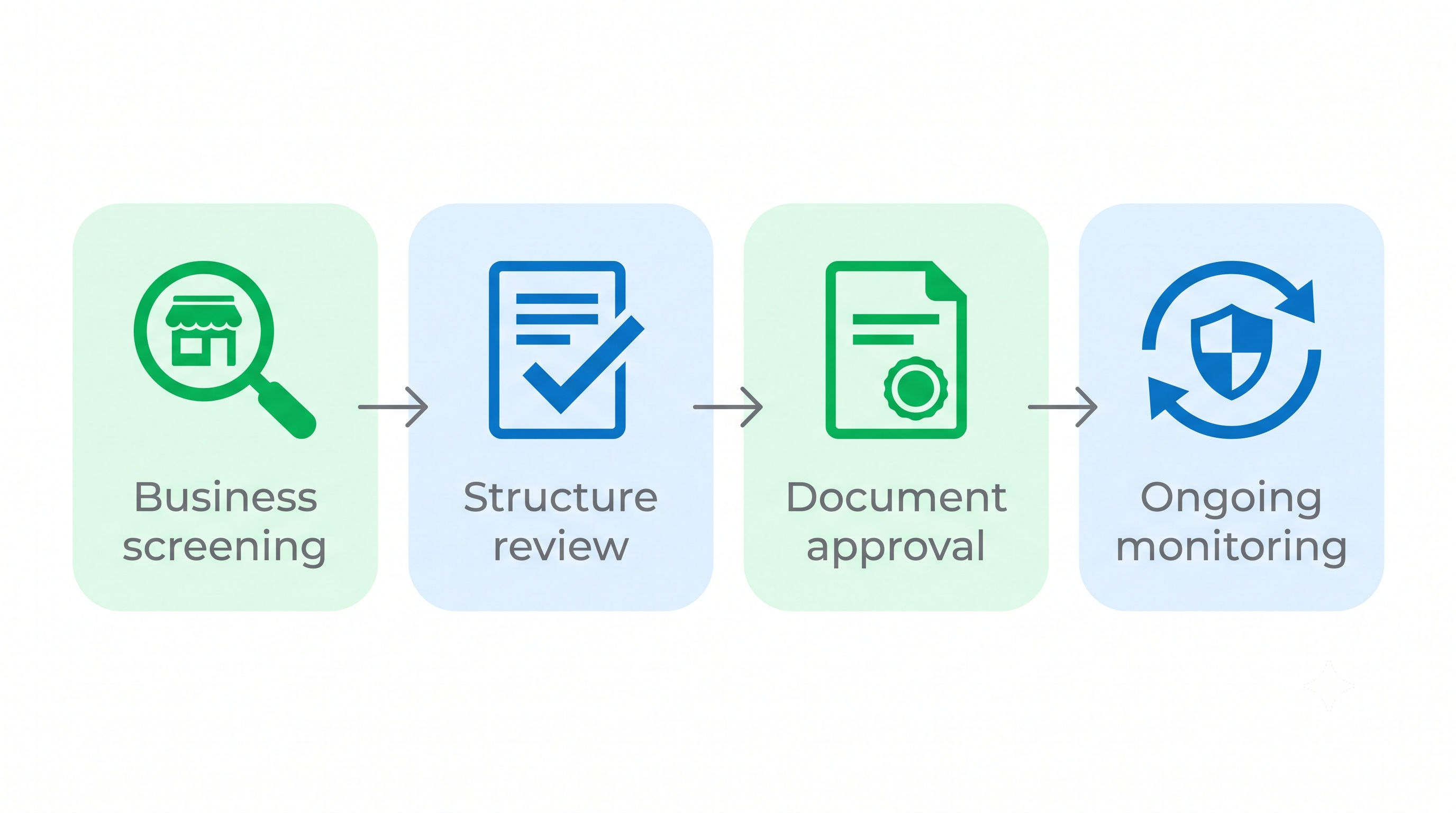
Image: The four-step Shariah compliance process at microLEAP.
Every Shariah-compliant Note goes through a documented review before it is offered, and it continues to be monitored afterward. microLEAP follows a four-step process for this.
- Business screening: Checking that the business does not operate in a Shariah non-compliant activity.
- Structure review: Confirming the financing uses a recognised Shariah contract and that the commercial mechanics are consistent with it.
- Documentation approval: Vetting the legal documents to ensure nothing contradicts Islamic principles.
- Ongoing monitoring: Checking that compliance is maintained throughout the financing period.
Late payment charges, known as Gharamah, are channelled to charitable causes rather than retained as profit. microLEAP also covers the Shariah costs, so for a given level of risk, a Shariah-compliant Note costs no more than a Conventional one.
Who certifies microLEAP's Shariah-compliant Notes?
microLEAP's Shariah-compliant Notes are reviewed and certified by Masryef Shariah Advisory, a registered Shariah advisory firm that provides independent Shariah review and certification.
Masryef's council of qualified scholars reviews and endorses the screening parameters and the approved structures used on the platform. Masryef then conducts a yearly Shariah audit of microLEAP's processes and issues a formal certification upon completion. The list of prohibited activities is set by the Shariah and Fatwa Supervisory Committee of Masryef, acting in its capacity as microLEAP's Shariah Adviser.
Is a Shariah-compliant note risk-free because it is Shariah-Compliant?
No. Shariah-compliance is about how the financing is structured, not a guarantee of returns, so the usual investment risks still apply.
- Being Shariah-Compliant does not remove payment risk. A Shariah-compliant Note comes with some element of default risk, exactly as a Conventional one does.
- SC-regulated: microLEAP is regulated by the Securities Commission Malaysia (SC), and the same protections apply to Shariah-compliant and Conventional Notes alike.
- Diversification still matters: Spreading your investment across several Notes remains sensible.
For the full picture on how P2P is regulated and how your money is protected, see Is P2P Financing Safe in Malaysia? SC Regulation Explained.
How do you start with Shariah-compliant investing with microLEAP?
You choose Shariah-compliant Notes by filtering for the Islamic option when you browse.
On the Funding List, filter by type and select Islamic to see the Shariah-compliant labelled Notes. From there, read each Note's credit rating, which runs from Low to Medium to High, and invest from as little as RM10. You are free to hold Shariah-compliant Notes only, Conventional Notes only, or a mix of both, depending on your preference. You can filter for Islamic Notes on the Funding List whenever you are ready to look.
For a step-by-step guide to getting started, see How to Start Investing in P2P with as Little as RM10.
Frequently asked questions about Shariah-Compliant P2P investing
Is P2P Shariah-Compliant in Islam?
P2P investing can be Shariah-Compliant when it is structured under recognised Shariah principles, avoiding interest, excessive uncertainty, and prohibited activities. microLEAP's Shariah-compliant Notes are built and certified to meet this standard.
Is peer-to-peer lending Shariah-Compliant?
Conventional, interest-based lending is generally not considered Shariah-Compliant because it involves Riba. Shariah-structured P2P financing, such as microLEAP's Shariah-compliant Notes, can be Shariah-Compliant because the return comes from a trade-based contract rather than interest.
What is Commodity Murabahah in simple terms?
It is a cost-plus sale where an asset is sold at its cost plus an agreed, openly stated profit margin, used here as the basis for financing instead of charging interest.
Can non-Muslims invest in Shariah-compliant Notes?
Yes. Shariah-compliant Notes are open to everyone, regardless of faith. Both Shariah-compliant and Conventional Notes are available on the same platform, and you can hold either or a mix of both.
How are returns Shariah-Compliant if you still earn a profit?
The profit comes from a genuine trade, agreed as a fixed markup at the start, rather than as interest accruing on money lent. Earning a profit from a real trade is permissible in Islam. Earning interest is not.
Conclusion
P2P investing can be Shariah-Compliant when it is properly structured and certified, and microLEAP's Islamic Notes are built, screened, and audited to meet that standard. They come at no extra cost compared with Conventional Notes, and they are open to everyone.
All investments carry some element of risk, including the possibility of delayed repayments and default. Returns are not guaranteed. Shariah-compliance relates to how the financing is structured, not to the performance of any Note.
Explore how microLEAP's Shariah-compliant financing works!